Septic Tank Pumping in Hawthorne, FL
Septic pumping and drain field service for Hawthorne, FL. Low, lake-dotted terrain and a high water table shape how often tanks need service.
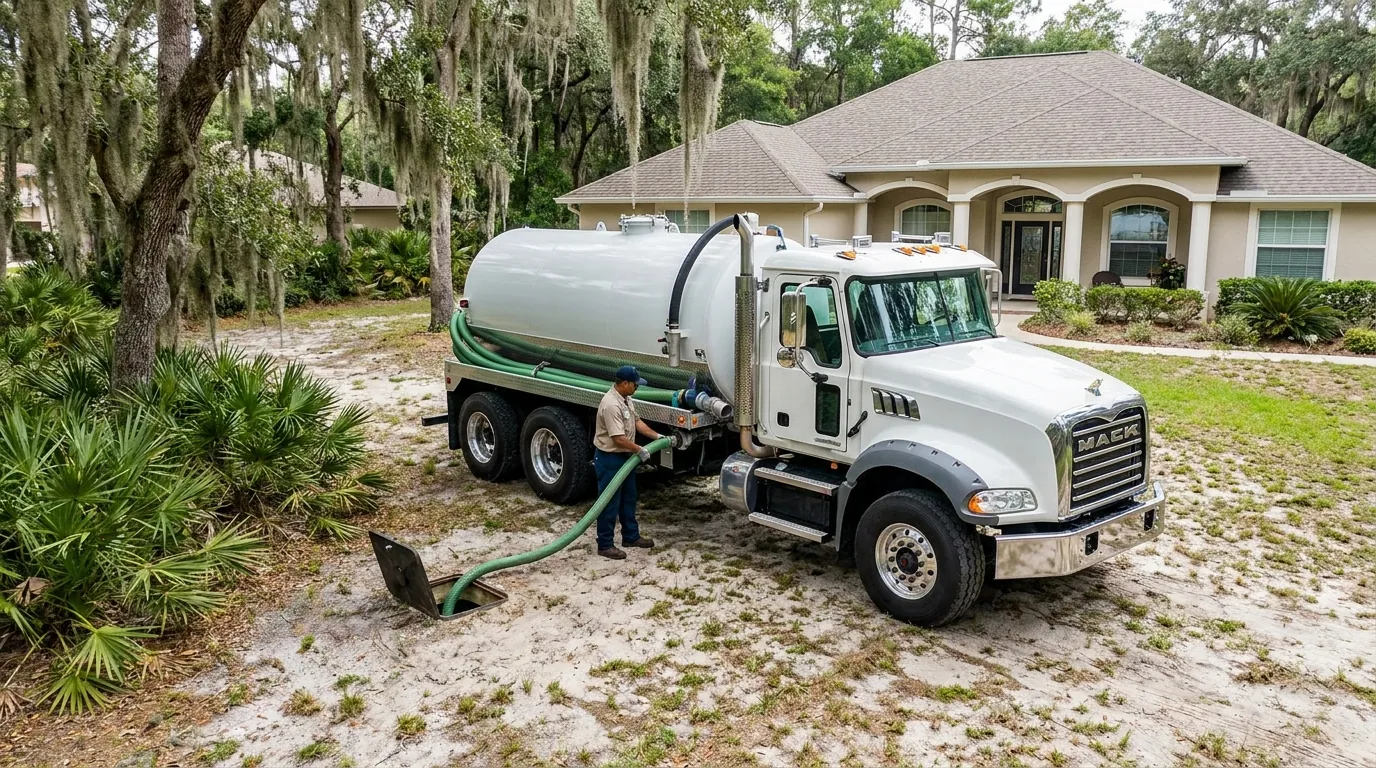
Serving Hawthorne Properties
Hawthorne sits east of Gainesville in a low, lake-dotted part of the county, with homes tucked among wetlands, woods, and waterfront lots. Almost all of these properties are on septic, and their setting near water and low ground makes drain field health a bigger concern than in the drier uplands.
Where the water table sits high — and it does across much of the Hawthorne area, especially in the rainy season — the soil below a drain field stays saturated and accepts effluent more slowly. That leaves less margin for error. A tank that is behind on pumping is far more likely to push solids into the field and cause a backup in this terrain, so a steady pumping schedule is your best protection.
What We Handle in Hawthorne
Our routine service in Hawthorne is septic tank pumping and septic tank cleaning, with close attention to how the outlet is running given the wetter ground. Where the field is struggling, drain field service helps identify whether the problem is the tank, the field, or standing groundwater.
We also handle septic system inspection for property sales near the lakes and emergency pump-outs when a system backs up. Waterfront and low-lying lots benefit from being checked before the wettest months.
Schedule Hawthorne Service
Let us know if your lot sits low or near water and we will recommend a pumping interval that accounts for the drainage.
Call to schedule septic service in Hawthorne.
Frequently asked questions
Does living near the lakes in Hawthorne change my septic needs?
Low, waterside lots often have a high water table that keeps the drain field soil saturated and slower to drain. Staying current on pumping is the most reliable way to protect these systems.
When is the best time to have my Hawthorne tank pumped?
Having the tank pumped before the summer rainy season gives the system the most margin when the water table rises. If you are already overdue, sooner is better than waiting.
What are the first signs of trouble in a Hawthorne drain field?
Standing water, spongy ground, or odors over the field, along with slow drains inside, are the usual warnings. Have the tank inspected first, since an overfull tank is the most common cause.