Septic Tank Pumping in Gainesville, FL
Septic tank pumping service in Gainesville, FL. How pumping works, warning signs a tank is full, and how sandy soil and a high water table change the job.
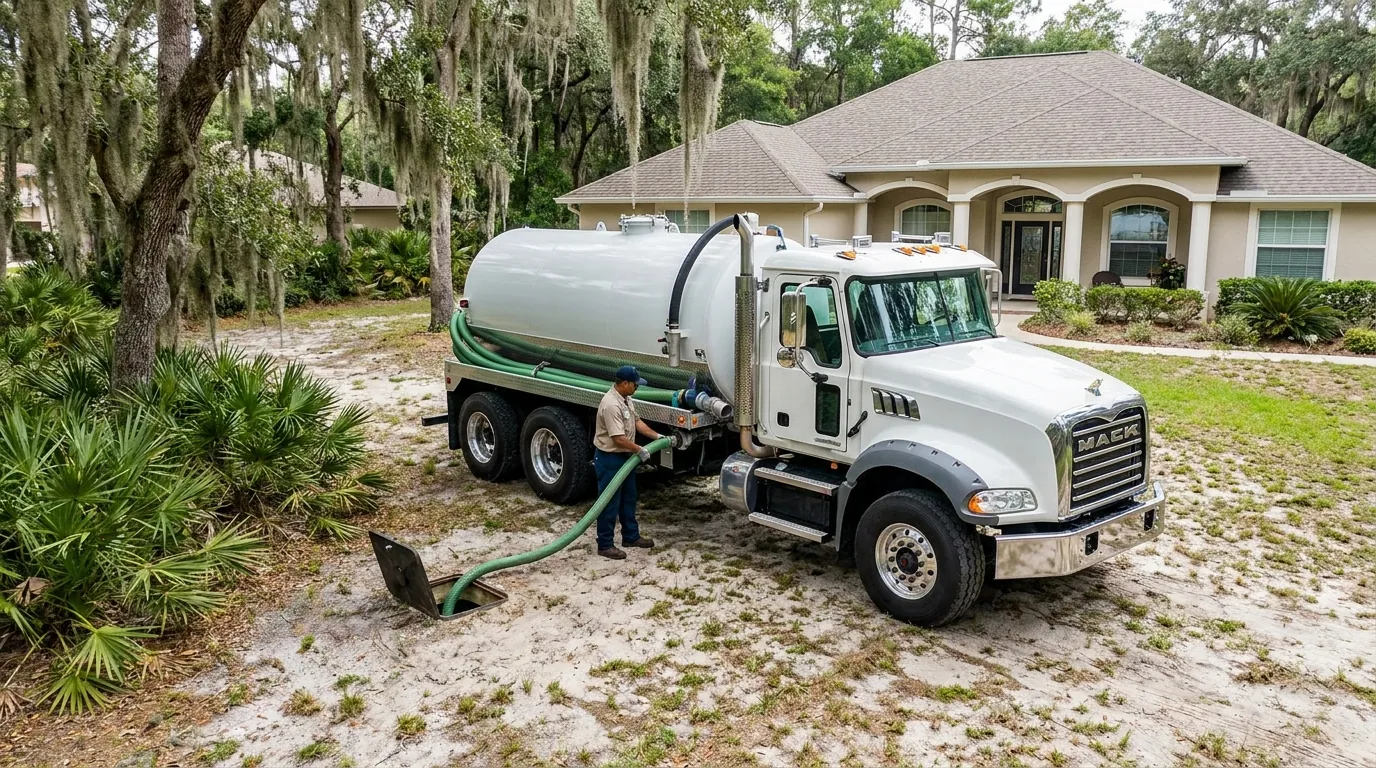
Why septic tank pumping matters here
A septic tank works by holding wastewater long enough for solids to settle to the bottom as sludge and for grease and light material to float to the top as scum. The relatively clear liquid in the middle flows out to the drain field. Over time the sludge and scum layers grow, and if they are never removed they eventually reach the outlet and push solids into the drain field — where they clog the soil and cause failures that cost far more than routine pumping.
Around Gainesville the sandy soils drain quickly, which is good for a drain field but also means a struggling tank can hide problems until the field is already damaged. Our septic tank pumping service removes the full sludge and scum load so the tank can do its job again. Regular pumping is the single cheapest thing you can do to extend the life of the whole system.
If you are not sure whether your tank is due, a septic system inspection can measure the sludge depth and tell you where you stand. If your tank is backing up right now, our septic emergency service is the faster route.
What a pumping visit involves
A standard septic tank pumping service follows the same sequence on most Gainesville-area properties.
-
Locate and uncover the access lids
The tank's inlet and outlet access ports are located and dug out if they are buried. Many older Gainesville homes have lids under several inches of sandy soil or landscaping, so a bit of digging is normal on a first visit.
-
Measure sludge and scum
Before pumping, the sludge and scum layers are measured. This tells us how overdue the tank is and helps set a sensible interval for next time, based on your household size and usage.
-
Pump the full tank
A vacuum truck removes the entire liquid, sludge, and scum contents through the access port. Pumping the whole tank — not just the liquid off the top — is what actually resets the sludge clock.
-
Inspect the interior
With the tank empty, the baffles, inlet and outlet tees, and walls are checked for damage or root intrusion. Problems found here are far cheaper to catch now than after a backup.
-
Backfill and note the interval
Lids are re-secured and the area is backfilled. You get a recommended return window so the tank never gets to the point of pushing solids downstream.
Ready to schedule a pumping?
Whether it has been three years or you honestly cannot remember, get your tank measured and pumped before problems reach the drain field.
Serving Gainesville and nearby towns including Alachua, Newberry, and High Springs.
Frequently asked questions
How often should a septic tank be pumped in Gainesville?
For a typical household, every three to five years is a common range, but the right interval depends on tank size and how many people live in the home. Because our sandy soils can mask a failing system, having the sludge measured at each visit is the most reliable way to set your schedule.
What are the signs my septic tank is full?
Slow drains throughout the house, gurgling toilets, sewage odors near the tank, and soggy or unusually green grass over the drain field all point to a tank that is overdue. If you see standing wastewater at the surface, treat it as urgent.
Does pumping remove everything in the tank?
A proper pumping removes the liquid, the floating scum, and the settled sludge from the bottom. Pumping only the liquid off the top leaves the sludge behind and defeats the purpose, so the whole tank should be emptied through the access port.
What drives the cost of septic tank pumping?
Tank size, how full it is, how deep the lids are buried, and access for the truck all affect the price. We do not publish exact figures because every property differs, but routine pumping is far cheaper than repairing a drain field damaged by a neglected tank.