Stop using water
Every flush and every load of laundry adds more water to a system that already cannot accept it. Cutting off water use is the fastest way to keep a backup from getting worse.
Septic emergency service in Gainesville, FL. Backups, surfacing sewage, and overflows — what to do first and how local conditions drive many emergencies.
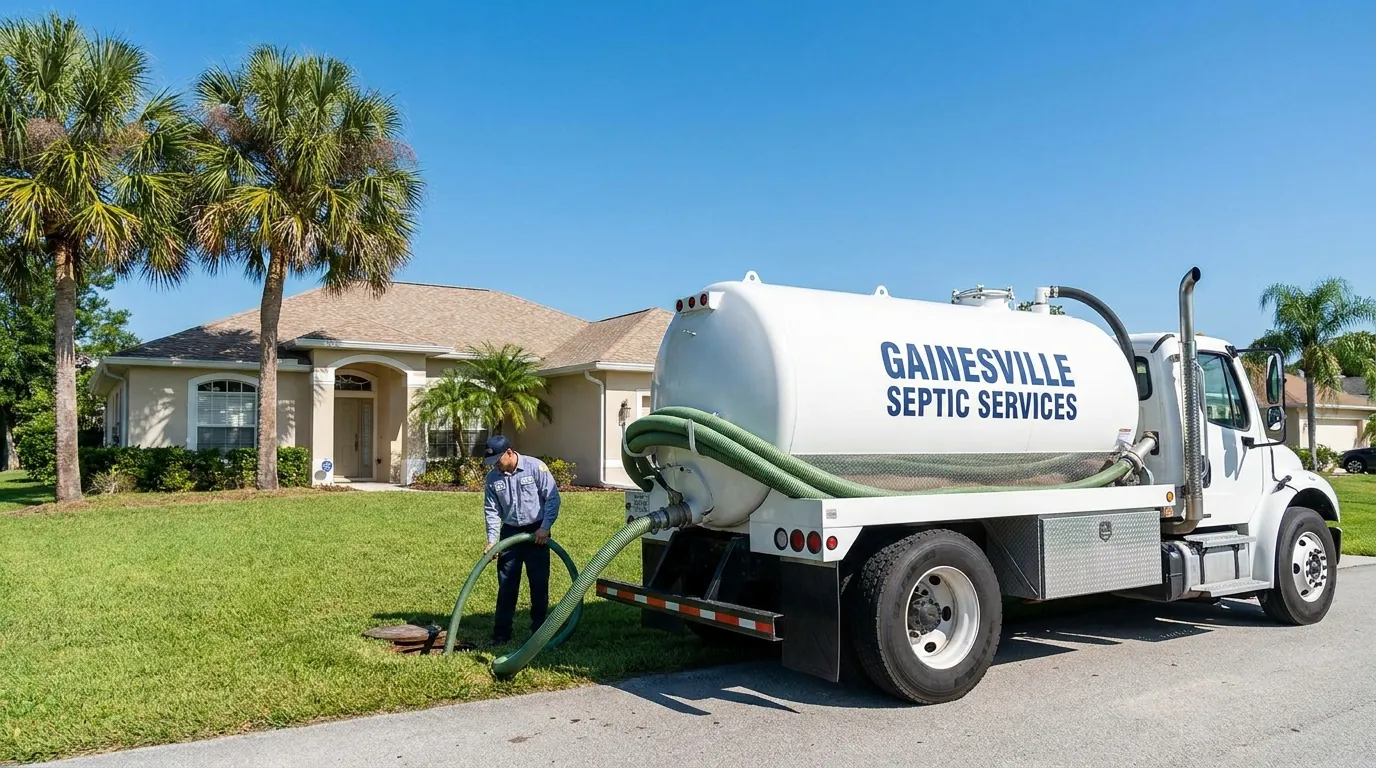
A septic emergency is any situation where wastewater cannot go where it is supposed to and starts coming back into the home or surfacing in the yard. Sewage backing up into tubs, sinks, or toilets, multiple drains failing at once, or effluent pooling over the tank or drain field are all signs that the system has stopped moving water through. These are health hazards as well as plumbing problems, and they rarely improve on their own.
Around Gainesville, many septic emergencies cluster around the summer rainy season. When the water table rises and the ground is already saturated, a drain field that was coping suddenly cannot accept any more water, and wastewater has nowhere to go but back up the pipes. A tank that was quietly overdue for pumping often reaches the tipping point during these wet stretches. Emergency service focuses on relieving pressure fast — usually by pumping the tank — then finding the underlying cause.
Many emergencies start as an overdue tank, so once the crisis is handled the follow-up is often routine septic tank pumping and a septic system inspection to prevent a repeat. If the drain field is the culprit, our drain field service is the next step.
A few simple steps limit the damage before help arrives.
Every flush and every load of laundry adds more water to a system that already cannot accept it. Cutting off water use is the fastest way to keep a backup from getting worse.
Sewage that has backed up or surfaced is a health hazard. Keep everyone away from affected areas and avoid contact with the water.
Pouring drain cleaners or septic additives into a backed-up system does not help and can complicate the work. Let the tank be pumped first.
Knowing roughly where the tank and lids are helps the response move faster once the truck arrives.
Stop running water and reach out. Relieving pressure quickly is what keeps a backup from becoming a much larger cleanup.
Emergency response across Gainesville, Alachua, Newberry, Archer, Hawthorne, La Crosse, and High Springs.
Stop all water use immediately, keep people and pets away from any sewage, and avoid adding chemicals or additives. Then reach out so the tank can be pumped to relieve the pressure that is forcing water back into the house.
Gainesville's high water table rises with sustained rain, saturating the soil so the drain field can no longer absorb effluent. A tank that was already near capacity then reaches its limit, and wastewater backs up because it has nowhere else to go.
A single slow drain is often a localized clog, but slow or gurgling drains throughout the house point to the septic system itself. If multiple fixtures are affected or sewage is surfacing, treat it as urgent rather than waiting.
Pumping relieves the immediate backup in most cases by emptying the tank so water can move again. It does not fix an underlying problem like a damaged drain field, so an inspection afterward is important to prevent the emergency from returning.