Septic Tank Pumping
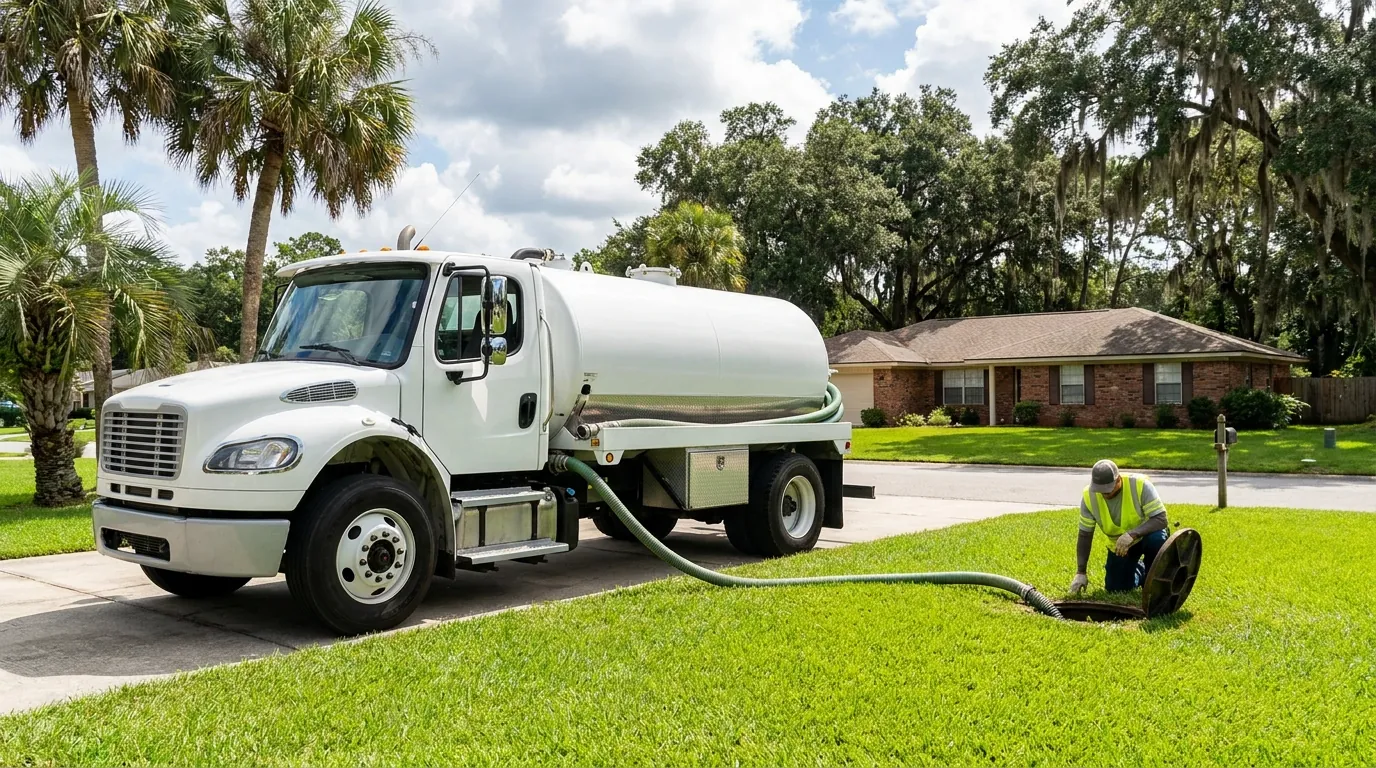
Scheduled pump-outs that remove accumulated sludge and scum before they reach the outlet and clog the drain field. The heart of keeping a system healthy.
Gainesville Septic Systems
Septic tank pumping, cleaning, and inspection built around Gainesville's sandy soils and high water table.
If your home sits outside the city sewer lines around Gainesville, your septic system is quietly doing a big job every single day. When it is working, you never think about it. When it stops working, a full tank or a saturated drain field can back up into the lowest drain in the house within hours. Gainesville Septic Systems focuses on keeping that from happening with routine septic tank pumping, cleaning, and honest inspection.
Gainesville and the surrounding parts of Alachua County share a specific set of conditions that shape how septic systems behave: high humidity, sandy soils that drain fast, and a water table that can sit close to the surface after a wet stretch. That combination is not the same as a septic system in clay country, and it changes how often a tank needs pumping and how a drain field is likely to fail. We plan the work around those local realities rather than a one-size-fits-all schedule.
This site is for the homeowner who wants to understand what is going on under the yard — the warning signs, the process, and the decision about what to do next — before it becomes a mess. Whether you are due for a routine pump-out or you are standing over a slow-draining tub wondering what happened, the pages below walk through each service in plain language.
A septic system relies on two things doing their jobs: a tank that separates solids from liquid, and a drain field where the liquid soaks into the ground and filters through the soil. Around Gainesville, the soil is largely sandy, which normally drains quickly — a good thing for a drain field. But fast-draining sand comes with a catch: after long summer downpours and tropical systems, the water table can rise until the ground around the field is already saturated. When that happens, there is nowhere for the tank's effluent to go, and the whole system slows down or backs up even though the tank itself may be fine.
That is why timing matters here. Pumping frequency in this area depends less on a fixed calendar and more on how many people use the home, how much water runs through it, and how the field is coping through the wet season. A tank that has gone too long between pump-outs sends solids into the field, and in saturated Gainesville sand those solids clog the soil's pore space and shorten the field's life. Staying ahead with regular septic tank pumping is far cheaper than replacing a drain field.
Humidity and heat also keep the biological activity in the tank running year-round, which is generally helpful — the bacteria that break down waste stay active. The flip side is that heavy grease, harsh cleaners, and too much water can throw that balance off quickly. If you are unsure where your system stands, a septic system inspection gives you a clear picture before the next rainy stretch tests it.
Core septic services for households and small commercial properties across the Gainesville area.
Scheduled pump-outs that remove accumulated sludge and scum before they reach the outlet and clog the drain field. The heart of keeping a system healthy.
A look at tank levels, baffles, and how the field is handling flow — useful before a home sale, after a backup, or when you suspect a problem.
A more thorough clean-out than a routine pump, removing hardened solids and buildup that a quick pump leaves behind.
Attention to the part of the system that quietly does the filtering — the area most affected by Gainesville's high water table and heavy summer rain.
Pumping and cleaning of grease traps for kitchens and food-service properties, keeping fats out of the tank and lines.
Response when a tank is backing up or overflowing and it cannot wait for a scheduled appointment.
Most households land somewhere in the every-few-years range, but the right interval depends on tank size, how many people live in the home, and how much water you use. Homes with sandy fast-draining soil still need regular pumping because solids build up in the tank regardless of how well the field drains.
Common signs include slow drains throughout the house, gurgling in the plumbing, sewage odors near the tank or field, and wet or unusually green patches over the drain field. If you notice these, it is worth an inspection before it becomes a backup.
Yes. When the water table rises after prolonged rain, the ground around the drain field can become saturated, leaving nowhere for effluent to soak in. This can cause a slowdown or backup even when the tank has been pumped on schedule.
We serve Gainesville and nearby towns including Alachua, La Crosse, Archer, Newberry, Hawthorne, and High Springs. If you are just outside these areas, reach out and we will let you know.
Yes. If a tank is backing up or overflowing, our septic emergency service is set up to respond when the problem cannot wait for a routine appointment.
Practical answers to the questions we hear most in Gainesville, FL.
What drives septic tank pumping cost in Gainesville, from tank size to access and Alachua County soil conditions, plus how to avoid surprise charges.
A practical guide to how often Gainesville, FL homes should pump a septic tank, based on household size, tank size, and the local high water table.
Learn the warning signs of a full septic tank for Gainesville, FL homes, and how the local high water table and sandy soil change what to watch for.
Whether you are due for routine service or dealing with a slow drain right now, reach out and we will help you figure out the next step. Call the number at the top of the page to get started.
Serving Gainesville and nearby Alachua County towns.
Gainesville and the surrounding towns in and around Alachua County.