Grease Trap Pumping in Gainesville, FL
Grease trap pumping in Gainesville, FL for restaurants and food businesses. What it involves, how often to schedule it, and why local conditions matter.
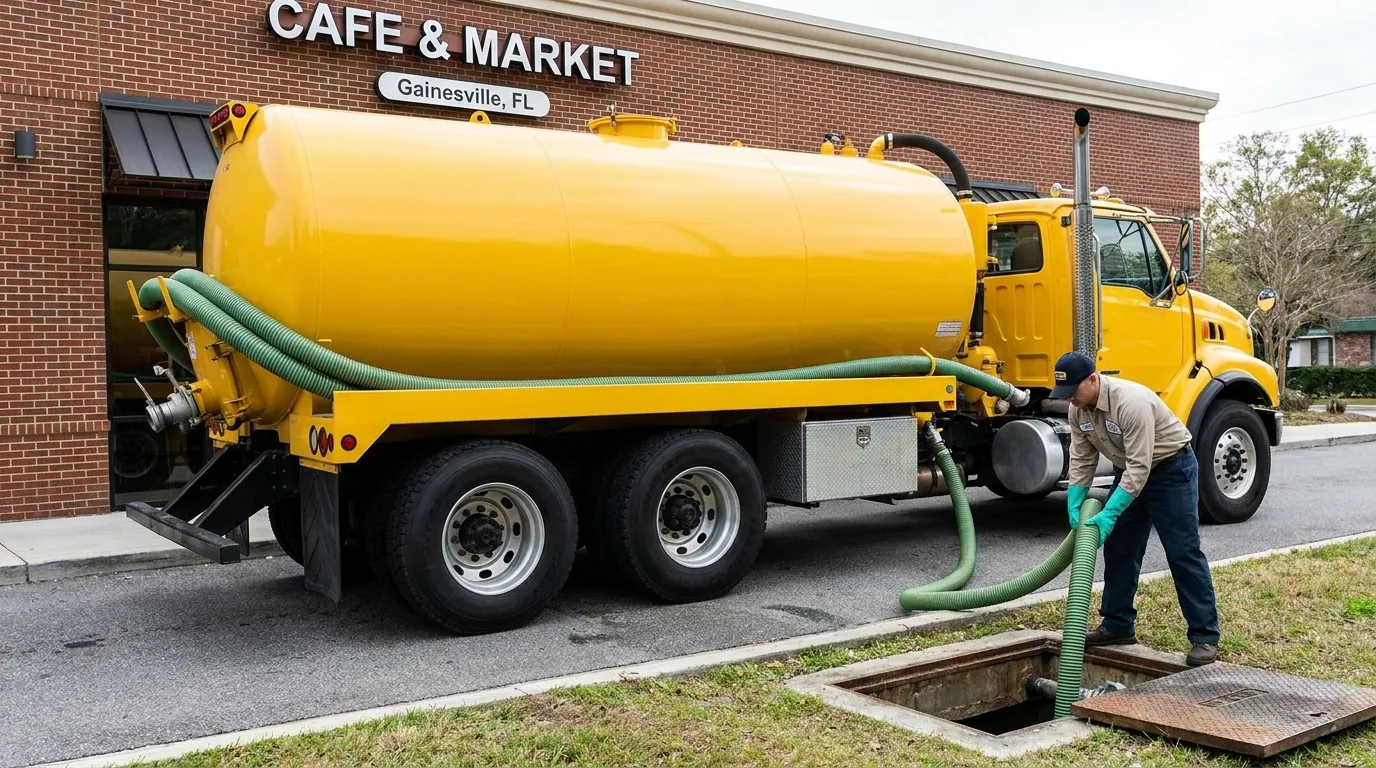
Why grease traps need regular pumping
A grease trap sits between a commercial kitchen and the rest of the plumbing, slowing wastewater down so fats, oils, and grease can cool, harden, and float to the top while food solids settle to the bottom. Only the cleaner water in between should pass through. When the trap fills, that grease and solid buildup starts escaping downstream, where it clogs lines, causes backups, and — on a septic system — can smother the tank and drain field.
For food businesses around Gainesville, warm temperatures keep grease more fluid for longer, which can let more of it slip past a trap that is overdue for service. Grease trap pumping removes the accumulated fats, oils, grease, and solids so the trap works as designed. Regular service is not just about avoiding backups; it protects the whole system a kitchen depends on to stay open.
For businesses on a septic system rather than city sewer, keeping the grease trap clean directly protects the tank — the same tank that our septic tank pumping service maintains. A septic system inspection can confirm whether grease has already reached the tank.
What grease trap pumping involves
A grease trap service follows a straightforward routine.
-
Open and assess the trap
The trap lid is removed and the depth of the grease and solids layers is checked to confirm how full it is and how it is performing.
-
Pump out the contents
All accumulated fats, oils, grease, and settled solids are vacuumed out completely, not just skimmed off the top.
-
Scrape and clean interior surfaces
Hardened grease clinging to the walls and baffles is removed so the trap regains its full holding capacity.
-
Check baffles and fittings
The baffles and fittings are inspected for damage that would let grease bypass the trap, and the lid is resealed.
Keep your kitchen running
Set up a service interval that matches your kitchen's volume so you avoid emergency backups during service hours.
Grease trap pumping for food businesses in Gainesville and surrounding towns.
Frequently asked questions
How often should a grease trap be pumped?
It depends on the size of the trap and how much grease your kitchen produces, but many food businesses service theirs every one to three months. High-volume kitchens may need more frequent pumping to stay ahead of buildup.
What happens if a grease trap is not pumped?
Grease escapes the trap and hardens in the plumbing, causing slow drains, foul odors, and backups. On a septic system it can also reach the tank and drain field, leading to far more expensive problems than routine pumping would prevent.
Can I pump my own grease trap?
Grease and food waste must be handled and disposed of properly, and doing it incompletely tends to leave hardened buildup behind. Professional pumping removes the full contents and cleans the trap so it performs as designed.
Does grease trap service apply to homes?
Grease traps are mainly a commercial fixture. In homes, the best defense against grease is keeping fats and oils out of the drain entirely and pumping the septic tank on schedule so any grease that does get through is removed regularly.