Soggy ground or standing water
Persistently wet or spongy soil over the field, especially when it has not rained recently, means effluent is surfacing instead of soaking in.
Drain field service in Gainesville, FL. Spot the signs of a failing field, understand what the work involves, and how a high water table affects your options.
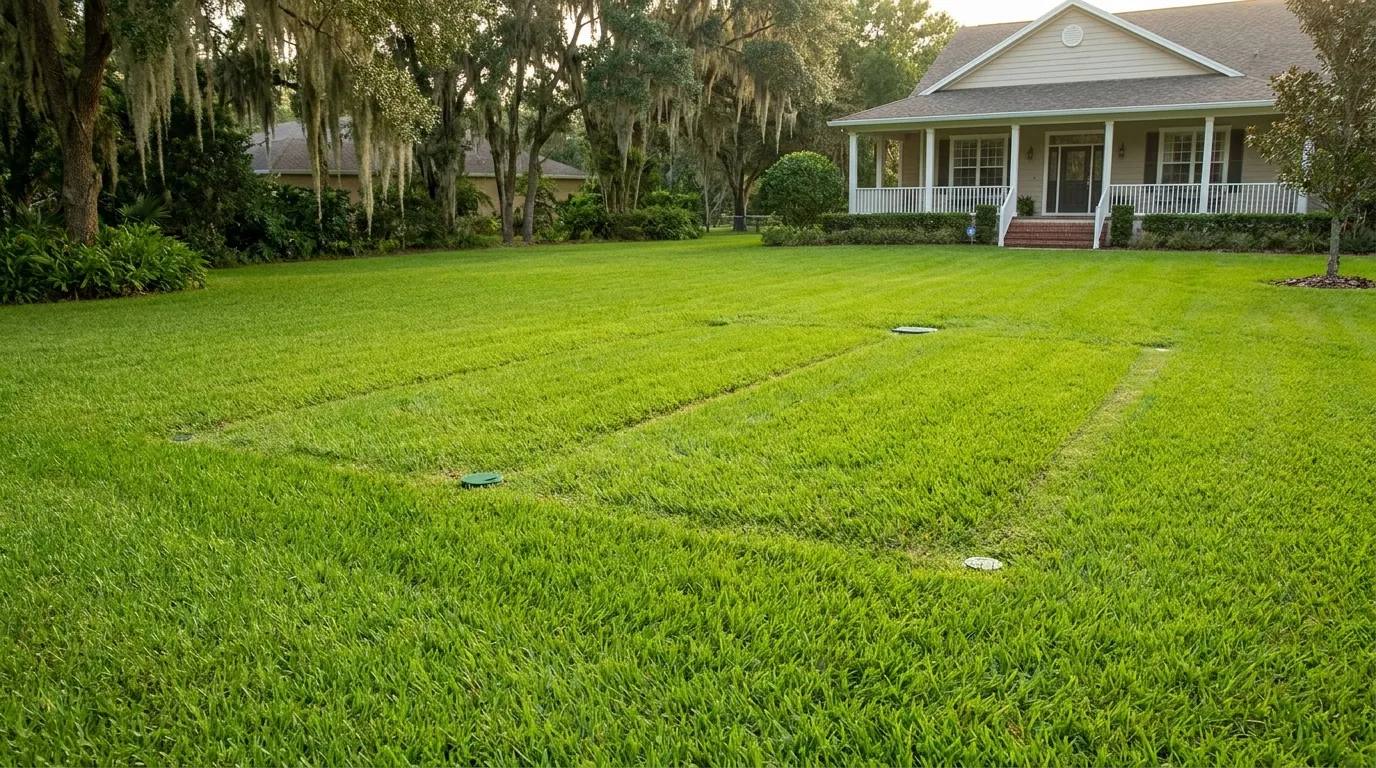
The drain field — sometimes called the leach field — is the network of perforated pipes and gravel or chambers that releases treated liquid from the tank back into the soil. It is the most expensive part of a septic system to replace, and it is also the part most often damaged by neglect elsewhere. When solids escape a full or damaged tank, they clog the soil pores in the field, and once those pores are sealed the ground can no longer absorb water.
In and around Gainesville, the high water table is the drain field's biggest challenge. During the summer rainy season, groundwater can rise close to the bottom of the field, leaving little room for effluent to percolate. Sandy soil normally drains well, but when it is already saturated even good soil cannot keep up, and you see wet spots, odors, or backups inside the house. Drain field service focuses on relieving that load and restoring the soil's ability to accept water where possible.
Most drain field problems trace back to the tank, so the first step is usually septic tank pumping and a septic system inspection to confirm what is really happening below the surface.
Drain field trouble usually shows itself above ground before the system fails completely.
Persistently wet or spongy soil over the field, especially when it has not rained recently, means effluent is surfacing instead of soaking in.
A bright green stripe over the drain lines while the rest of the yard is normal signals that liquid is reaching the surface and feeding the grass.
Sewage smells outdoors point to effluent that is not being absorbed and treated by the soil as designed.
When drains slow down or back up during Gainesville's wet season, a saturated field that cannot accept more water is a common cause.
Drain field problems only get more expensive with time. Catching them early keeps repair options open.
Drain field service throughout Gainesville and nearby towns.
Sometimes. If the problem is caught early and is driven by an overloaded tank or temporary saturation, relieving the load and correcting the source can restore function. A field that has been fully clogged for a long time may need replacement, which is why early attention matters.
Gainesville's high water table rises with heavy summer rain, reducing the space in the soil for effluent to percolate. A field that copes fine in dry months can back up when the ground is already saturated.
Yes, indirectly and importantly. Regular pumping keeps solids from reaching and clogging the field, which is the leading cause of premature field failure. It cannot un-clog a field that is already damaged, but it prevents most of that damage in the first place.
Keep vehicles and heavy equipment off it, direct roof and surface runoff away from it, avoid planting trees nearby, and conserve water during heavy rain so the field is not overloaded. Routine tank pumping is the single most effective protection.