Tank structure and baffles
The tank walls, inlet and outlet tees, and baffles are checked for cracks, corrosion, and root intrusion. Failed baffles let scum escape to the drain field, which is a leading cause of premature field failure.
Septic system inspection in Gainesville, FL. What we check, warning signs of failure, and when an inspection saves you from a costly septic system repair.
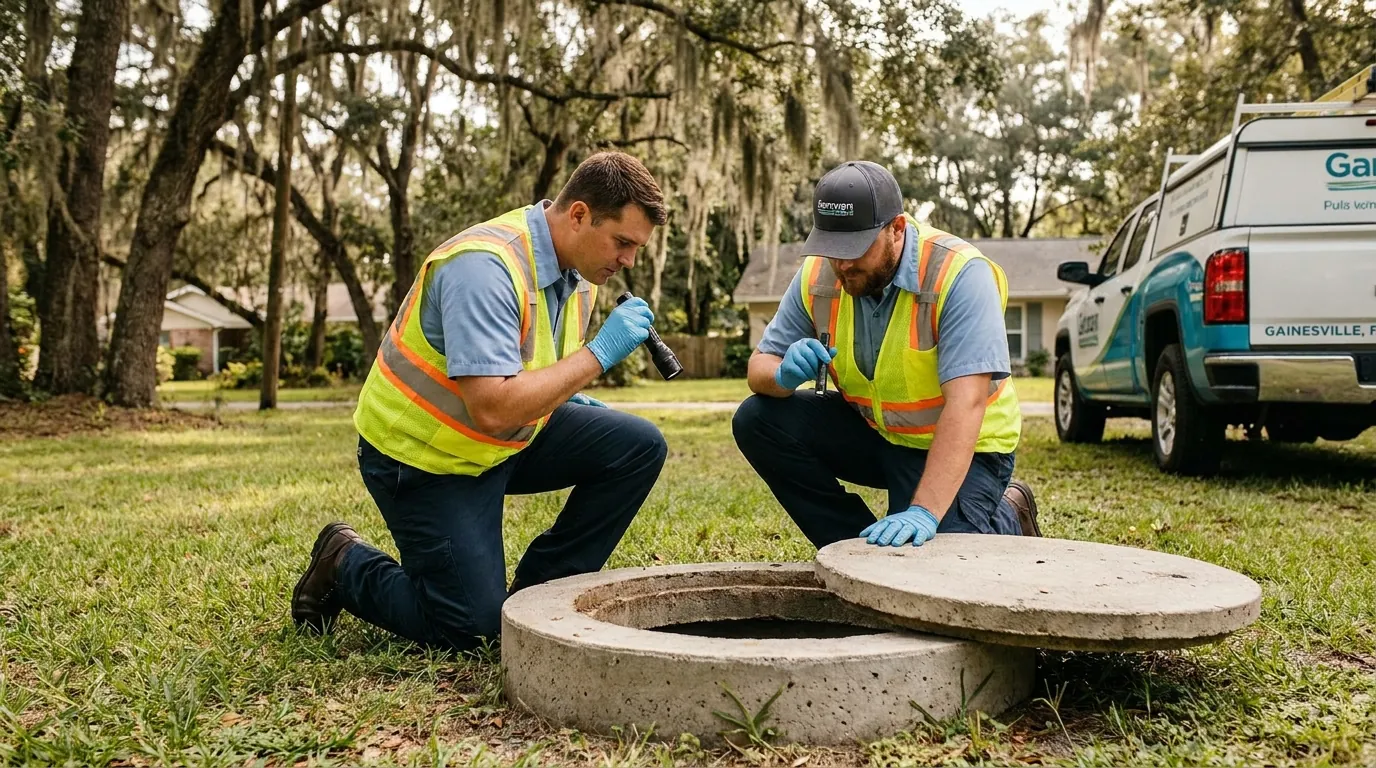
A septic system inspection is a structured look at every part of the system: the tank and its baffles, the sludge and scum levels, the inlet and outlet, and the drain field's ability to accept water. It is the step that turns guesswork into a plan. People book inspections before buying a home, when drains have started acting up, or simply to confirm a system is healthy before something fails.
In the Gainesville area, the high water table is the reason inspections matter more than many homeowners expect. When groundwater rises after heavy summer rain, a marginal drain field can flood and stop absorbing effluent, and a cracked tank can take on water it was never meant to hold. An inspection catches these weaknesses while they are still a septic system repair and not a full replacement.
If an inspection shows the tank is simply overdue, the fix is often as simple as septic tank pumping. If the drain field is the problem, our drain field service is where the conversation goes next.
A thorough septic inspection looks well beyond just opening the lid.
The tank walls, inlet and outlet tees, and baffles are checked for cracks, corrosion, and root intrusion. Failed baffles let scum escape to the drain field, which is a leading cause of premature field failure.
Measuring both layers shows whether the tank is due for pumping and whether solids have already started migrating toward the outlet.
We look for surfacing effluent, soggy ground, and odors over the field — the earliest signs that the soil is struggling to absorb water, which is common when Gainesville's water table is high.
Running water through the system reveals slow drainage or reverse flow that points to a clog between the house and the tank or the tank and the field.
An inspection gives you an honest assessment and a next step, whether that is a pumping, a repair, or simply a note to check again in a couple of years.
Available across Gainesville, Alachua, Archer, Newberry, Hawthorne, La Crosse, and High Springs.
Most residential inspections take one to two hours, depending on how easily the tank access can be located and whether the tank needs to be pumped to view the baffles clearly. Older properties with buried lids can add time to the visit.
It is strongly recommended. A home's septic system is expensive to replace, and a pre-purchase inspection tells you whether you are inheriting a healthy system or a looming septic system repair before you close.
Yes. An inspection looks for surfacing effluent, saturated soil, and odors that reveal a field beginning to fail. Catching this early sometimes allows a repair rather than a full replacement.
Often it makes sense to pump during the visit so the technician can see the tank interior clearly and you avoid a second trip. If the inspection shows the tank is not yet due, pumping can wait.